Neuroplasticity and Healing: How to Retrain Your Brain’s Protective Responses
Your brain is constantly learning – including how to react to smells, foods, sensations and stress. Neuroplasticity means that these learned responses can change. Here is how it works, and how I used it on my own healing journey.
What Is Neuroplasticity?
Neuroplasticity is the brain’s ability to change its connections throughout life. Every time we learn something, neural connections are strengthened, and connections we no longer use can weaken. This is how we learn and adapt – and it is also how we can change patterns that no longer serve us.
For a long time, scientists thought the adult brain was relatively fixed. Today we know the opposite is true: the brain keeps changing at every age.
In 1949, the Canadian psychologist Donald Hebb described one of the basic principles of how this happens. It is often summarised as “neurons that fire together, wire together.” When two things repeatedly happen at the same time, the brain links them – even when they have no real connection.
How your brain learns to react to smells, foods and sensations
Think of a banana. You probably picture its colour, taste and smell straight away.
When I was nine, I received a banana-scented shampoo as a birthday present. I was so happy that the strong emotion created a lasting connection in my brain. Even today, the smell of banana brings that shampoo to mind.
The same thing can happen with fear. A smell, a food, a place or a bodily sensation can become linked to danger if it occurs alongside a strong emotional experience. Over time, the trigger alone can be enough to set off the learned reaction.
But neuroplasticity works both ways. The brain can learn new connections and unlearn old ones. This is the foundation of the Free to Heal® method.
Your brain is constantly learning
Things that happen together can become associated in the brain, even when they aren’t objectively connected.
Your Inner Guardian is trying to keep you safe
I call the part of us that learns these reactions the Inner Guardian. It constantly tries to anticipate danger, but it can’t always tell the past from the present. A symptom can be one of its alarms. The response is real – but it may be an old way of keeping you safe that you no longer need.
Neuroplasticity works throughout life
Neuroplasticity isn’t something that only happens in childhood. The adult brain keeps learning – which means your past does not have to define your future.

Rewiring the Brain: How Self-Directed Neuroplasticity Works
If the brain can learn a response, it can also learn a new one. This is the principle behind self-directed neuroplasticity: deliberately creating new neural connections through mental imagery, emotional experiences and repetition.
Mental practice is already used in physical rehabilitation. When someone has lost an ability, repeatedly imagining and practising the movement can help the brain build new pathways for it.
The same principle can be applied to learned reactions:
- A smell can become connected to danger.
- A sensation can become connected to fear.
- A food can become connected to symptoms.
These connections feel automatic because they have been reinforced over time. But they are learned – and through training, new ones can be created.
Repetition is essential. The more often a new connection is reinforced, the stronger it becomes, and a positive emotional experience can strengthen it further. We learn the new and unlearn the old at the same time.

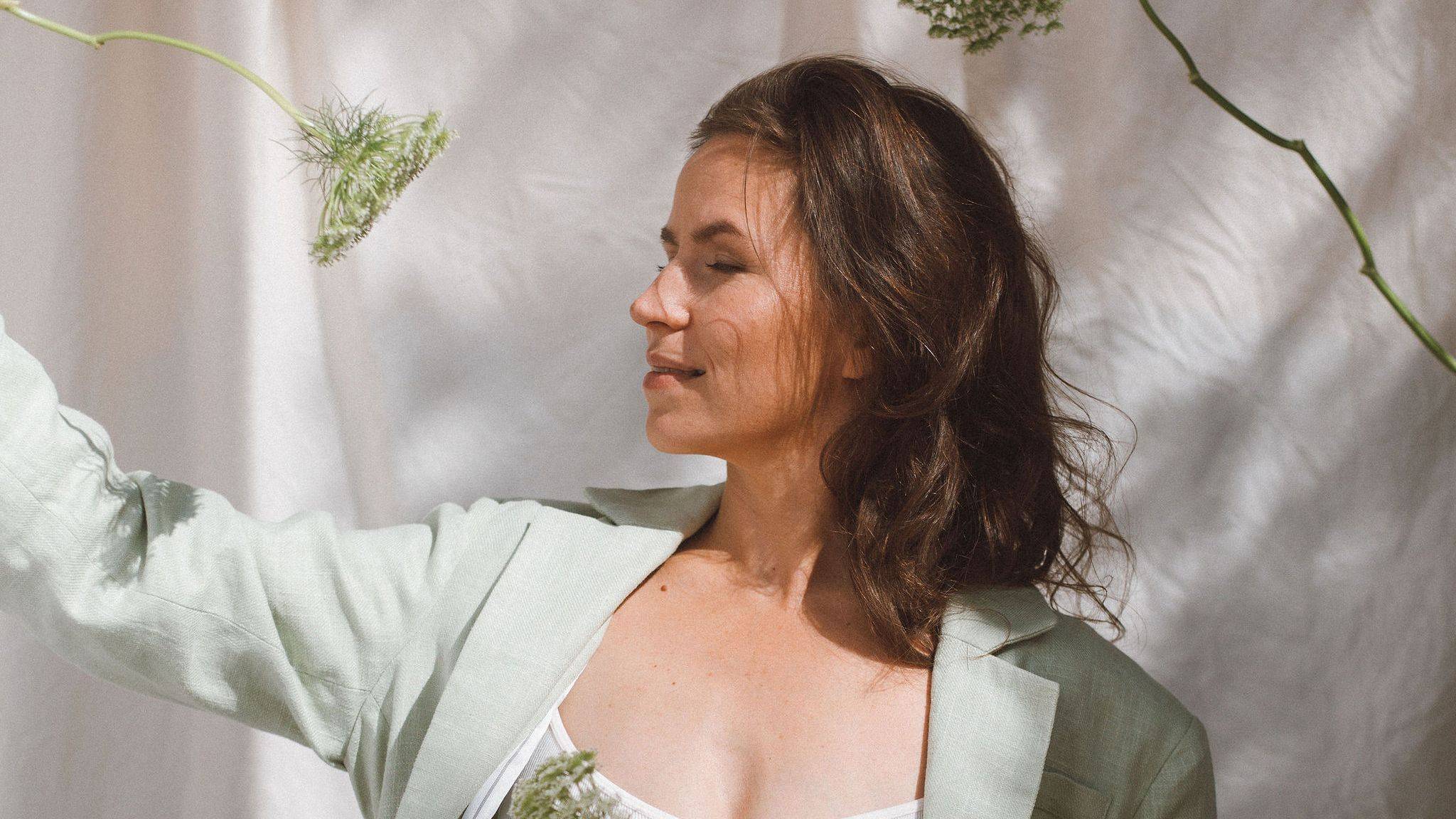
How Neuroplasticity Led Me to Create the Free to Heal® Method
My understanding of neuroplasticity came from my own healing journey. I had developed an extreme sensitivity to smells and chemicals – my brain seemed to recognise danger everywhere.
I noticed that my hypersensitivities became worse during particularly stressful and emotionally intense periods of my life, and I began to wonder whether my brain had learned to connect certain smells, environments and sensations with danger.
So I began training. I focused on creating new connections between smells, emotional experiences and my body, teaching my brain that these experiences did not have to mean danger.
A few weeks later, I spent several hours in an old, musty-smelling house for a work assignment. Previously, an environment like that would have caused severe symptoms. This time I noticed the smell – and nothing happened. That was the moment I realised something was really changing.
Next, I began working with my reaction to wheat. As the training progressed, a childhood memory surfaced: I was ten years old, sitting at the table, struggling to swallow my food while fighting back tears. The sensations were strikingly similar to those I experienced years later.
These experiences showed me how powerfully the brain links emotions, memories, sensations and the body. And if the brain can create these connections, it can create new ones. That realisation became the foundation of the Free to Heal® method.
The brain is constantly learning. The question is: what are you teaching yours?
What Brain Retraining Involves in Practice
The Free to Heal® method is built on these principles (in my book Rewire Your Brain and Heal it is presented in 12 steps). In practice, the daily exercises focus on:
- Noticing the response – recognising when a trigger sets off a familiar reaction, without fighting it.
- Calming the nervous system – helping the body feel safe in the moment.
- Creating a new association – using imagery, positive emotion and repetition to link the trigger with safety.
- Exploring the roots – gently looking at the memories, emotions and beliefs the response may be connected to.
- Repeating daily – a few minutes a day, so the new connection can grow stronger.
Stories from People Who Have Practised the Method
Everyone’s journey is different, and individual experiences are not a guarantee of results.
"Because of neuroplasticity, I have totally recovered. I absolutely recommend the method and the course. It changes everything. You totally get a new life"
~ Anna-Maria
"Free to Heal helped me see that the root wasn’t just physical, it was emotional. For the first time, I connected the dots — not just treating symptoms, but understanding myself on a whole new level."
~ Eerika
"I wasn’t sure, but I tried it — and it went fantastic. Now I can walk in fields with flowers and herbs, and I have no more problems. I’m very happy."
~ Jose

About the author
Maria Nordin
Creator of the
Free to Heal® Method
I’m Maria Nordin, creator of the Free to Heal® method and author of Rewire Your Brain and Heal: 12 Steps to Free Yourself from Symptoms, available in English and Spanish.
I studied philosophy and architecture in Helsinki and Barcelona, earned my Master of Science degree and specialised in indoor air quality – before my own symptoms led me to research the connection between the brain, emotions and the body. I’m also a mother of four.
Through my book, online course, meditations and talks, I share practical tools for working with the brain’s learned protective responses.
As Seen In


100,000+
users
worldwide
Over
50,000
books sold
in four languages
In over 40 countries
A method that has spread from Finland to the world
Frequently Asked Questions About Neuroplasticity
What is neuroplasticity in simple terms?
Can you really rewire your brain?
How long does it take to rewire your brain?
Can neuroplasticity help with allergies and sensitivities?
How is Free to Heal® different from DNRS or the Gupta Program?
Is brain retraining just positive thinking?
Is Free to Heal® a medical treatment?
Where can I start?
Start Retraining Your Brain
If you’d like to understand how this could apply to your own symptoms, start with my free masterclass. When you feel ready to practise, the Free to Heal® Guided Membership gives you the complete method, daily exercises and two live calls with me each month.
Sources
Hebb, D. O. (1949). The Organization of Behavior: A Neuropsychological Theory. New York: Wiley.

Medical Disclaimer: The Free to Heal® method is not a medical treatment and it doesn't exclude any medical treatments. If you have any questions concerning your health consult your doctor.